
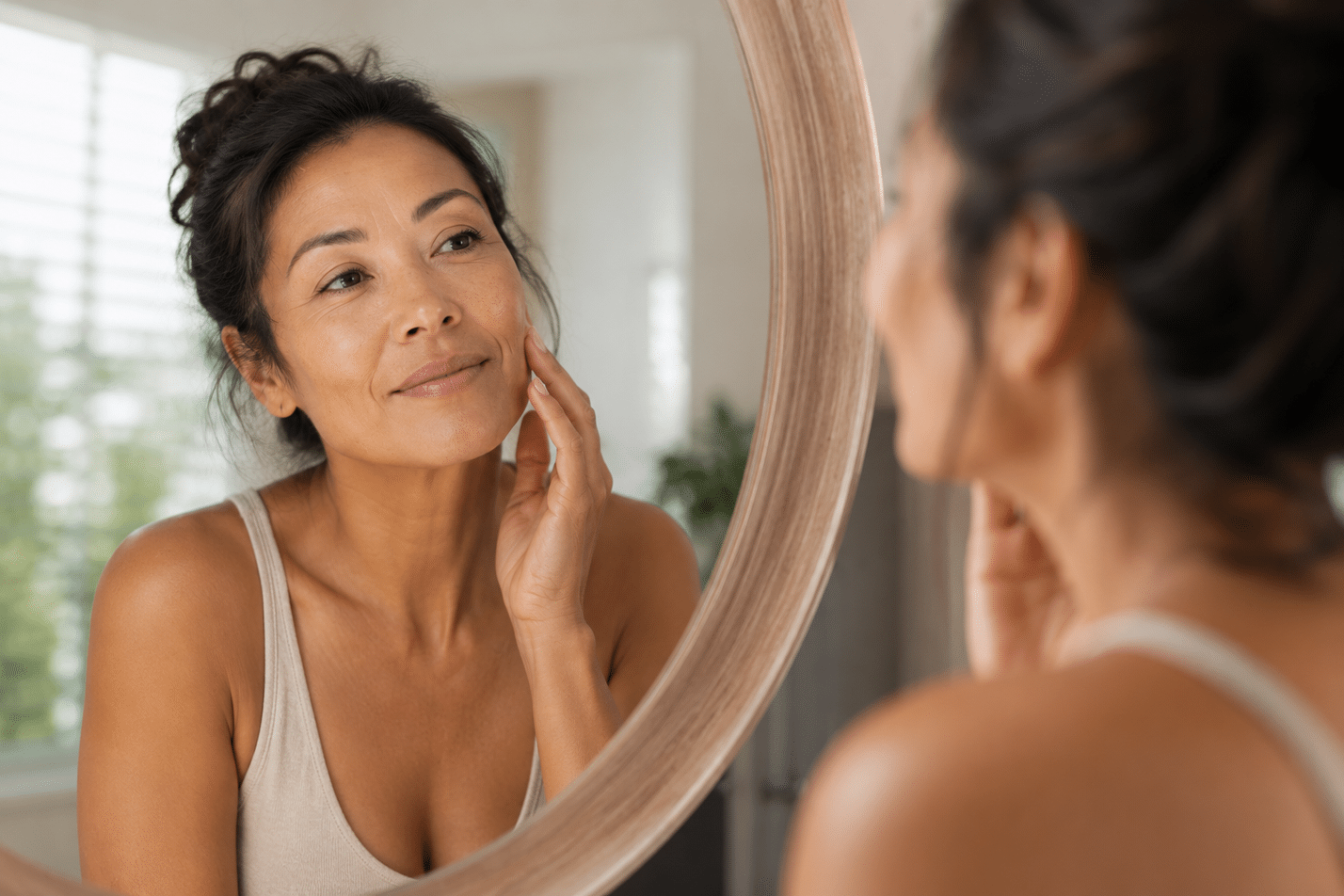
Sometimes the first place we notice internal changes is in the mirror.
Maybe your skin feels drier than it used to. Perhaps you’ve noticed more fine lines, changes in elasticity, or areas of crepey skin on your arms, chest, or neck. Some women tell me they look at recent photos and feel like they suddenly look older, more tired, or somehow different than they remember.
These changes can feel frustrating, especially when they seem to happen quickly. Many women find themselves wondering whether they need a new skincare routine, a different product, or the latest treatment promising youthful skin.
While those tools certainly have their place, many of the changes we notice during midlife begin beneath the surface.
The skin is not separate from the rest of the body. It responds continuously to hormonal shifts, inflammation, nutrition, sleep, hydration, circulation, and metabolic health.
Understanding these connections can help us approach skin health from a more complete and empowering perspective.
Why Skin Changes in Midlife
One of the most significant influences on skin health during midlife is the menopause transition.
Estrogen plays an important role in maintaining skin structure and resilience throughout much of a woman’s life. It supports collagen production, helps maintain hydration, and contributes to skin thickness and elasticity. As estrogen levels fluctuate and decline, many women notice that their skin feels drier, thinner, or less firm than it once did.
Research suggests that women can lose a substantial amount of collagen during the early years surrounding menopause. This loss contributes not only to fine lines and wrinkles, but also to changes in texture, healing capacity, and overall skin resilience.
What is important to understand is that these changes are not simply occurring on the surface. They reflect shifts in connective tissue, hydration, hormone signaling, and the body’s ability to repair and renew itself.
Understanding Crepey Skin
Few skin concerns generate as many questions from women in midlife as crepey skin.
Crepey skin refers to skin that appears thin, fragile, and finely wrinkled, often resembling crepe paper. It commonly develops on the upper arms, chest, neck, around the eyes, and above the knees.
It’s easy to assume that crepey skin is simply the result of aging or sun exposure. While those factors certainly contribute, the reality is more nuanced.
Declining estrogen, collagen loss, oxidative stress, chronic inflammation, hydration status, and nutritional factors all influence the skin’s ability to maintain structure and resilience. Over time, these changes can affect how the skin looks, feels, and responds to everyday stressors.
Crepey skin is often a visible reflection of physiological changes occurring throughout the body, not just within the skin itself.
It’s Not Just Skin
One of the most overlooked aspects of facial aging is that skin is only part of the story.
Throughout midlife, the face undergoes structural changes involving bone, fat, connective tissue, and muscle. Bone remodeling continues throughout life, and subtle changes in facial bone structure can influence the shape and support of the face. At the same time, facial fat pads gradually shift and redistribute, changing contours that once appeared fuller and more lifted.
These changes can alter a person’s resting facial appearance. Some women notice they appear more tired, sad, angry, or stern in photographs, even when they feel perfectly happy and well.
This can be surprisingly emotional because our faces influence how we see ourselves and how we are perceived by others.
Understanding that these changes involve underlying anatomy, not simply wrinkles or skin quality, can help bring context to a process many women experience but rarely hear explained.
The Role of Inflammation and Metabolism
When we think about skin health, we often think about what we put on our skin. Far less attention is given to the internal environment that the skin is living in every day.
Chronic inflammation can contribute to collagen breakdown, increased oxidative stress, impaired barrier function, and slower repair processes. Over time, these changes may influence skin texture, elasticity, and resilience.
At the same time, metabolic health plays an important role. When blood sugar remains elevated over time, excess glucose can attach to proteins such as collagen in a process called glycation. These glycated proteins become stiffer and less flexible, reducing the skin’s ability to maintain elasticity and structure.
This is one reason healthy skin is connected to much more than a skincare routine. It is influenced by inflammation, metabolism, circulation, hormone harmony, and overall health.
The health of your skin is closely connected to the health of the systems supporting it.
Eat Your Skincare
One of the most powerful ways to support healthy skin is through nourishment.
Healthy skin requires a constant supply of nutrients to support collagen production, repair, hydration, circulation, and protection against oxidative stress. Protein provides the building blocks for collagen and connective tissue. Vitamin C helps support collagen formation. Healthy fats contribute to skin barrier function, while colorful fruits and vegetables provide antioxidants that help protect skin cells from everyday damage.
This is where the idea of “eating your skincare” becomes so valuable.
While topical products can support the skin externally, nutrition helps support the skin at its foundation. Every meal becomes an opportunity to provide the raw materials needed for repair, renewal, and resilience.
Supporting Skin Health from the Inside Out
The encouraging news is that many of the same habits that support overall wellness also support healthy skin.
Consider focusing on:
- Adequate protein intake throughout the day
- Colorful fruits and vegetables rich in antioxidants
- Healthy fats that support skin barrier function
- Hydration and mineral balance
- Blood sugar stability
- Quality sleep and stress management
- Regular movement to support circulation
These habits may not produce overnight results, but they help create an internal environment that supports skin health over the long term.
When Support Makes the Difference
Skin changes can provide valuable clues about what is happening beneath the surface. While some changes are expected during midlife, they can also serve as an invitation to better understand the factors influencing overall health.
At UPLEVEL Holistic Health, we help women explore the connections between hormones, inflammation, metabolism, nutrition, and healthy aging. Rather than focusing on symptoms in isolation, we take a whole-body approach that supports vitality from the inside out.
If you’ve noticed changes in your skin, or simply want to better understand how your body is changing during midlife, the UPLEVEL Team is here to support and guide you.
Committed to your health, vitality, and longevity,
Dr. Lexie Ching